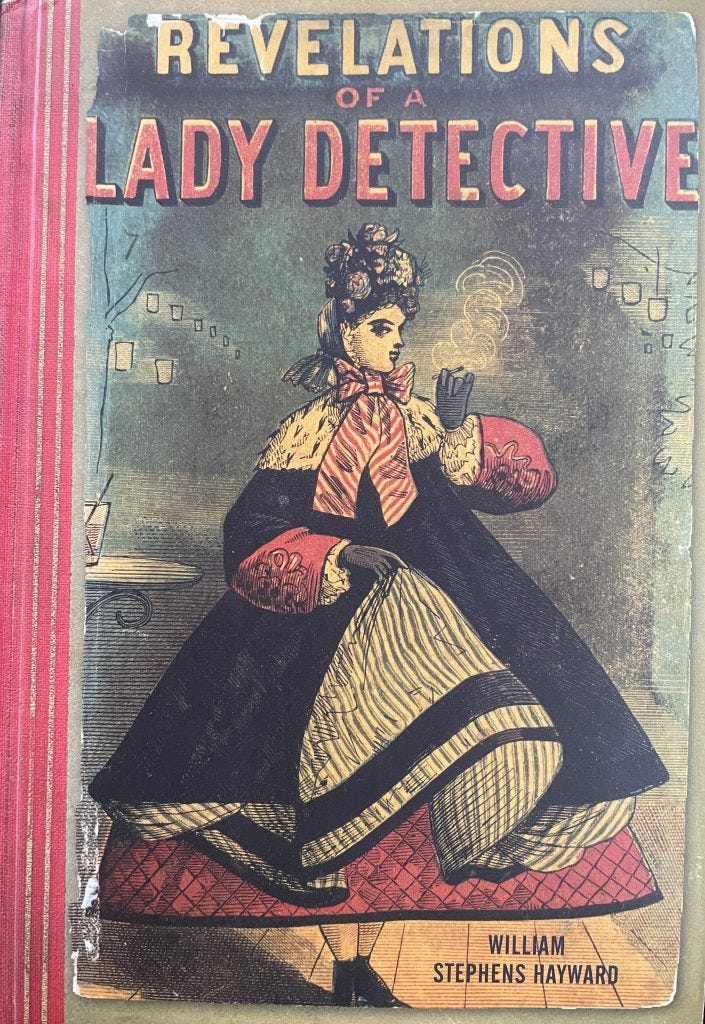
The Female Private Investigator in Mystery Fiction


The female private investigator in the mystery genre dates back to Victorian fiction and has evolved through various waves of genre, social changes, and feminist influence. As early as the 1850s–60s, real women worked as detectives in Britain and America’s private agencies, inspiring cross-dressing and tough-minded heroines in stage plays and penny fiction. Victorian fiction highlighted both working-class and upper-class women in detective roles. However, the image was often sensationalized—a mix of reality and fantasy with heroines who handled undercover work and societal suspicion.

In the 1920s–30s “Golden Age,” series like Patricia Wentworth’s Miss Maud Silver and Hulbert Footner’s Madame Rosika Storey established the professional, resourceful female sleuth in both English and American settings. These characters moved from amateur “ladies’ detectives” to competent, economically active investigators or “private enquiry agents,” setting the stage for the modern PI protagonist.


A true revolution came in the 1980s with Sue Grafton’s Kinsey Millhone (“A is for Alibi,” 1982), launching a wave of pragmatic, independent female private eyes and helping shift the genre’s tone toward realism and personal autonomy. This trend has persisted into the present, as seen in Alexander McCall Smith’s internationally popular Precious Ramotswe series (“The No. 1 Ladies’ Detective Agency,” 1998–), among many others.


Recent nonfiction also documents the real-world contributions of female PIs, from Victorian trailblazers to today’s professionals. Thus, the female private investigator novel reflects a hybrid history: shaped by both literary imagination and the parallel lives of trailblazing women in the field.
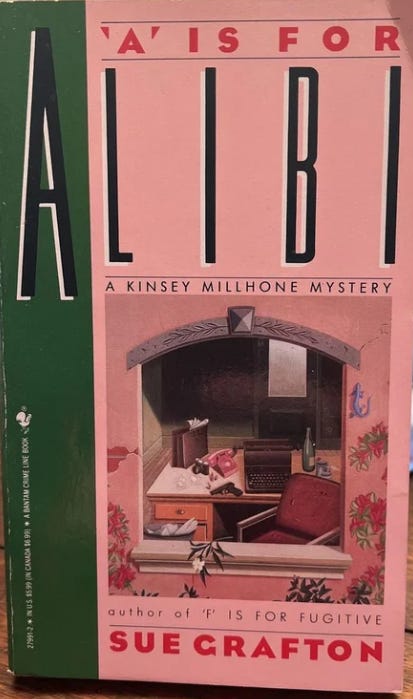


Essential authors who shaped the female private investigator novel include Marcia Muller, Sue Grafton, Sara Paretsky, and P.D. James. Marcia Muller’s creation of Sharon McCone (1977) is credited as the modern template for the single, working PI protagonist, influencing later writers like Sue Grafton (Kinsey Millhone series) and Sara Paretsky (V.I. Warshawski series).


Earlier figures include Agatha Christie (Miss Marple), Gladys Mitchell (Mrs. Bradley), and Catherine Louisa Pirkis (Loveday Brooke), who pioneered female sleuths in the late Victorian era and interwar “Golden Age” of detective fiction. In the hard-boiled genre, Erle Stanley Gardner’s Bertha Cool and later Katherine V. Forrest’s Kate Delafield series broke ground for unconventional and LGBTQ+ representation.


These writers collectively redefined the genre and inspired waves of contemporary authors, expanding the diversity and realism of female PI fiction
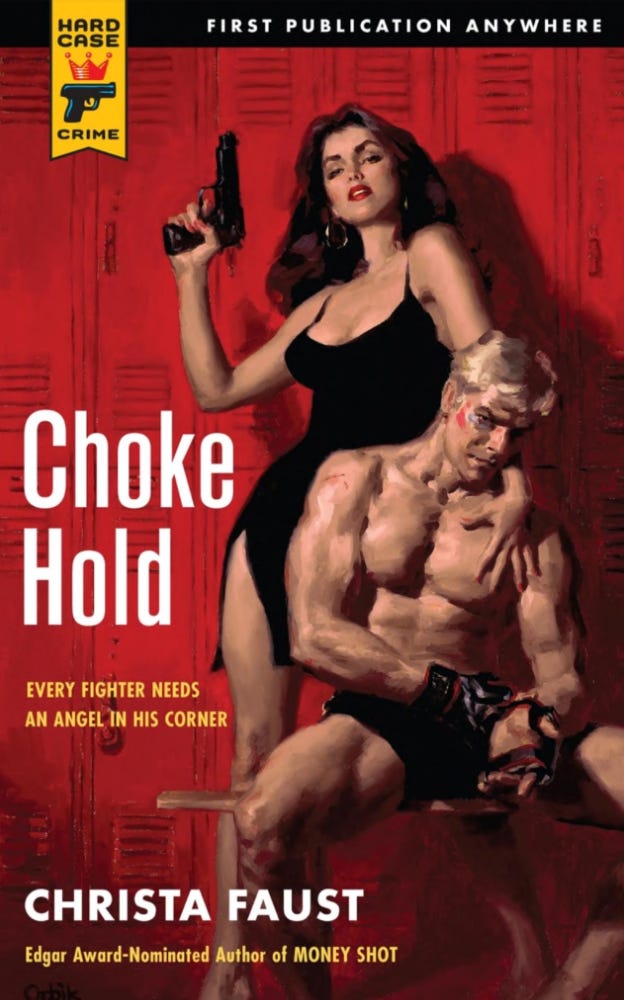


One excellent modern female detective is Angel Dare, a former porn actress who became an informal investigator. Christa Faust, the author, knows her mystery genre as the novel is hard-boiled and feminine at the same time. It also shows a side of Los Angeles that isn’t often portrayed.


….


  1. Sue Grafton’s Kinsey Milhone series
  2. Christa Faust’s Angel Dare series


Popular posts from this blog

Welcome

Thank you for visiting my website. You'll find information about me and my activities/social media here. If you came here looking for the actor Richard Grove, you've found him. For some crazy reason, I chose to use Richard as my first name while working as an actor in Hollywood. I have a separate post devoted to Richard Grove's acting career.  At present, I am producing a podcast about paperbacks called "The Paperback Show", along with participating in a podcast about machinima (3D movies made inside of video games) called, "And Now For Something Completely Machinima".  I am also an online bookseller at eBay and Etsy under the "Grove Used Books" name. In addition to books, I also sell collectibles, DVDs, and comic books.  Lastly, I have social media pages on Instagram and Facebook. My Flickr page contains all of my found photographs and photos I've taken over the years.  You'll find more detailed info on each of these activities in sepa...

Johnny Mandel's Great Jazz Score I Want To Live!

  Johnny Mandel , a composer of pop and jazz music, won his first Grammy nomination for the sound-track to Susan Hayward's overwrought film, "I want to Live". The score is much better than the movie. It's filled with great jazz hooks and has an energy that stays with you long after you've finished listening.  Mandel went on to win 5 Grammy's (out of 17 nominations). In addition to popular albums and musical arranging for other artists, he composed many film tracks. I particularly love his work on Point Blank, The Last Detail, Being There and the Verdict.  Archive.org hosts a recording of the original LP of "I Want to Live". You can download the entire score there. 

Cover of the Week: Modern Barbecue Cooking by Ed Bell

“Barbecue cooking is man’s oldest form of meal preparation. Prehistoric man was the first to barbecue” - Ed Bell The Iliad Bookshop in Los Angeles has two huge tables filled with sale books. Most are a dollar or two. My partner, Lisa Morton , works there and is always on the lookout for a sale book she thinks will appeal to me. Yesterday, she brought home Modern Barbecue Cooking by Ed Bell , which cost her one dollar. Being a barbecue lover myself (anyone who grew up in Arizona is automatically a barbecue lover), I pored over the book and found it to be a lot of fun. Dated a bit (the book was published in 1966), especially when it comes to the technology of barbecuing. However, overall, it remains a quite useful cookbook. Unfortunately, the poor-quality photographs in the book make the food appear unappetizing. Take a look: My God, the food looks like something a cannibal would cook. It seems that all of the mid-century cookbooks have this color problem. Thankfully, most of the ill...