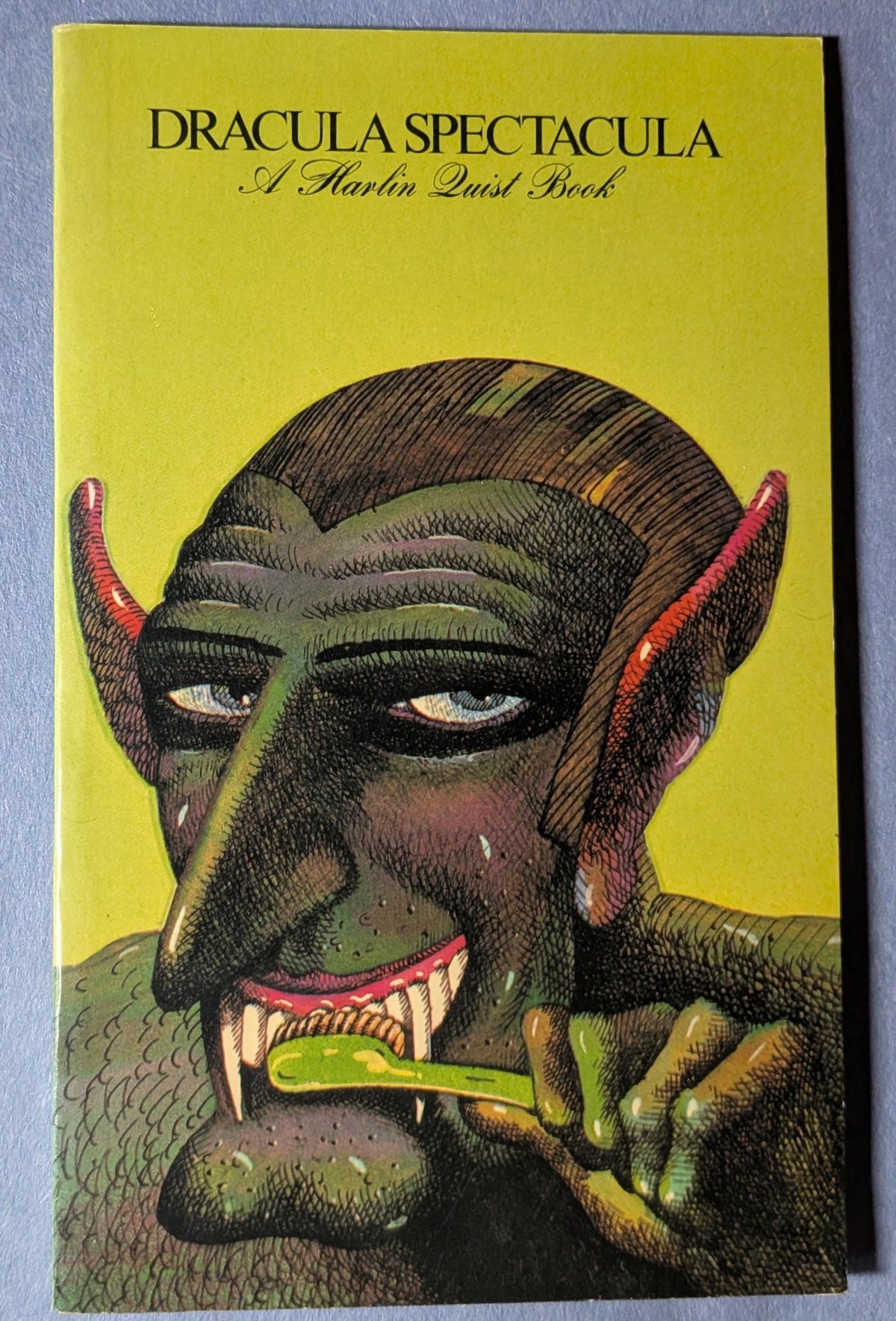
Harlin Quist (1930–2000) was an American theater producer turned book publisher who became one of the most innovative and controversial figures in 20th-century children’s literature.
If you’ve ever encountered a mid-century children’s book that felt oddly surreal, darkly humorous, or deeply existential, there is a strong chance it came from his press.
Before entering publishing, Quist was an off-Broadway actor and producer (even winning a few Obie Awards in the late 1950s). After brief editorial stints at Crowell-Collier and Dell, he struck out on his own in 1965, founding Harlin Quist Books with the explicit intent to reject the safe, sanitized world of traditional children’s stories.
Quist famously loathed the overly simplistic, comforting nature of typical mid-century primers like Dick and Jane, believing they dealt a “death blow to the imagination.” Instead, he aimed to publish sophisticated, visually aggressive literature that respected a child’s capacity for complex thought, ambiguity, and the absurd.
Operating out of New York and later Paris (in collaboration with François Ruy-Vidal), Quist’s books looked like nothing else on the market. They brought the aesthetics of the mid-century artistic avant-garde straight to the picture book format.
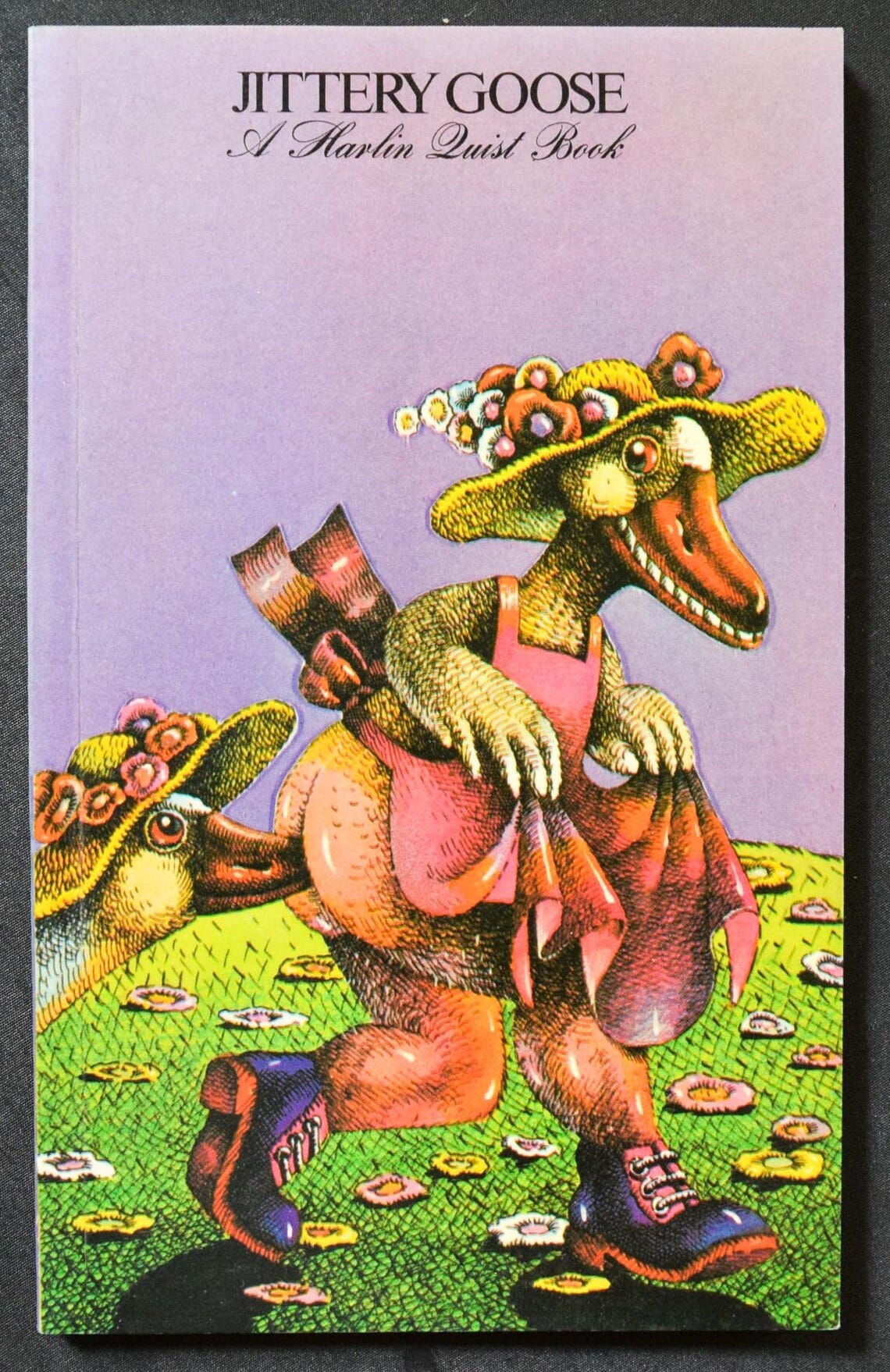
Visually arresting, intensely saturated, psychedelic, and often hauntingly surreal. He gave early career breaks to phenomenal international illustrators and designers like Guy Billout, Guillermo Mordillo, Nicole Claveloux, and Patrick Couratin.
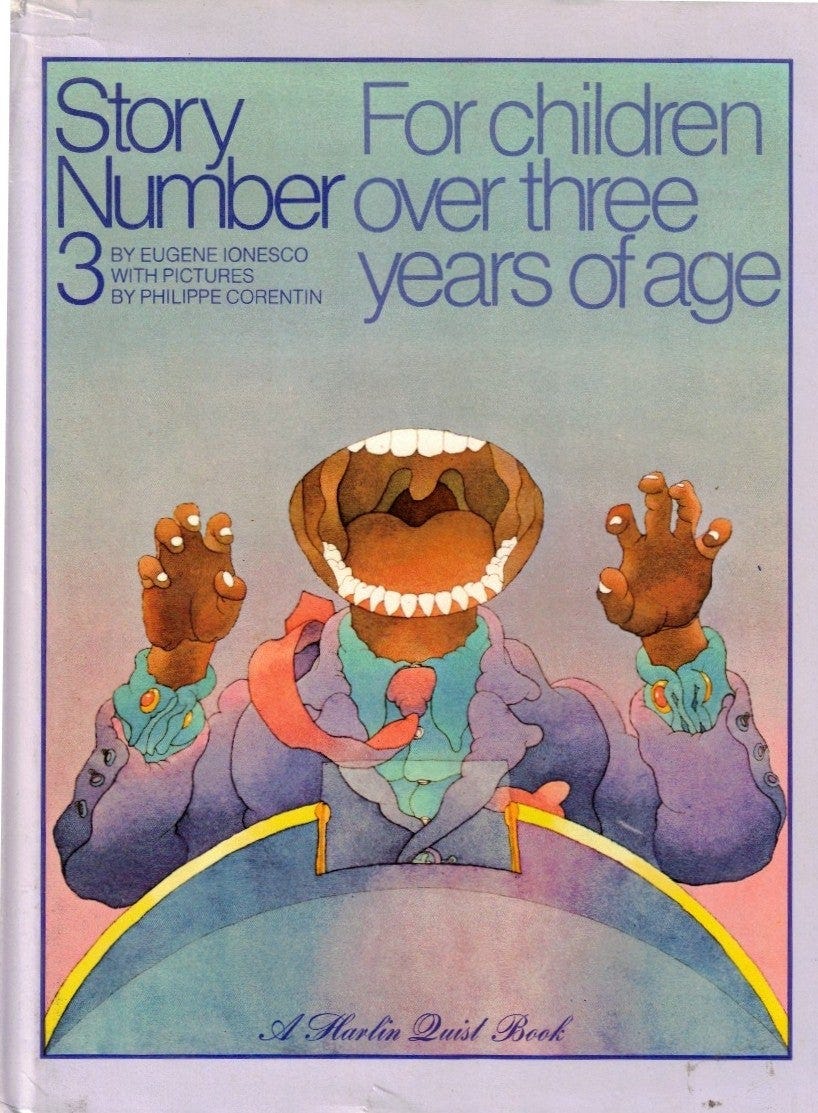
The stories in his books frequently defied traditional "happy endings." They embraced illogic, non-endings, and existential themes. A prime example was his publication of legendary Theatre of the Absurd playwright Eugène Ionesco’s Story Number 1 through Story Number 4—tales celebrating linguistic anarchy where a father teaches his toddler absolute nonsense words.
Quist’s books polarized the industry. To the graphic design and fine art communities, he was a visionary genius; his titles routinely won American Institute of Graphic Arts (AIGA) awards and spots on The New York Times Best Illustrated Children’s Books lists. To traditional librarians and educators, however, his books were often viewed with deep suspicion, censured for being too dark, confusing, or psychologically intense for young minds.
By the late 1970s, Quist abruptly closed his operations in New York and Paris, and his catalog quietly vanished from mainstream shelves, turning original Harlin Quist paperbacks and hardcovers into highly prized collector’s items for fans of surrealist illustration and vintage graphic design.
Notes:
Wikipedia page has a nice write up.
Children’s Literature Association Quarterly has a nice extract from the article, Why the Books of Harlin Quist Disappeared—Or Did They? by Nicholas Paley
Archived article on Harlin Quist and his obituary.
Comments
Post a Comment